This blog helps purchasers and engineers find a right magnet from a wide variety of grades, shapes, sizes and coatings of Rare Earth Neodymium magnets with a detailed purchasing guide, from key parameters to application scenarios, to help you make informed decisions. In industrial manufacturing and product development, Rare Earth Neodymium magnets have become indispensable core functional materials. However, faced with a wide variety of grades, shapes, sizes and coatings on the market, many purchasers and engineers find themselves in a dilemma: “How exactly do I choose the most suitable, economical and reliable neodymium magnet for my project?” Improper selection can lead to substandard product performance at best, and even project failure and huge economic losses at worst.
I. Understand Core Parameters: No Longer Confused by Grades of Rare Earth Neodymium Magnets
The magnetic specification lists a variety of magnetic properties as follows:
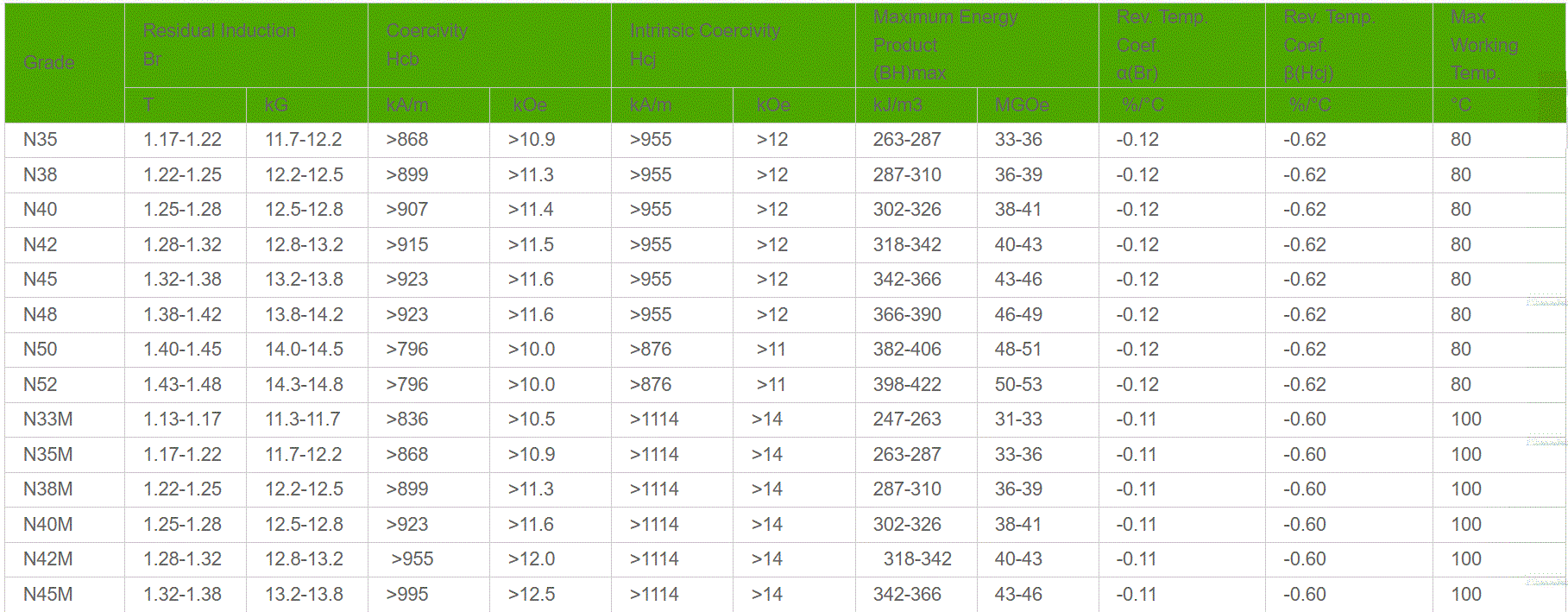
The first step in purchasing Rare Earth Neodymium magnets is to read their “identity card” — the performance grade. Common grades such as N35, N42, N52, N38SH, N45UH, N33EH, etc. — what exactly do they mean?
1. What does “N” stand for?
“N” indicates the magnet material is Neodymium-Iron-Boron, which means the grades belong to Neodymium magnet material. The number following “N” (such as 35, 42, 52) represents the material’s Maximum Energy Product (BHmax), measured in MGOe (Mega Gauss Oersted). This value directly reflects the magnetic strength of the magnet. The higher the number, the higher the magnetic energy stored per unit volume and the stronger the magnetic force. For example, N52 is stronger than N42.
2. What about the letters after “N”, such as H, SH, UH, EH?
The letters indicate the magnet’s maximum operating temperature and intrinsic coercivity (Hcj) . Intrinsic coercivity measures a magnet’s resistance to demagnetization: the higher the value, the better the stability.
Default (no letter, e.g. N35): Operating temperature generally ≤ 80℃
M (≤ 100℃), H (≤ 120℃), SH (≤ 150℃), UH (≤ 180℃), EH (≤ 200℃)
The later the letter appears in the sequence, the better the high-temperature resistance and demagnetization resistance. For instance, an N42SH magnet can maintain excellent magnetic properties at 150℃ in a closed-circuit environment.
3. Purchasing Misconception: Higher grades are not always better!
Although N52 has the strongest magnetic force, it has a lower operating temperature and higher costs and processing difficulty. Selection must comprehensively consider the actual application environment.
II. Targeted Selection: Precise Matching by Application Scenarios of Rare Earth Neodymium Magnets
Different industries have distinct priorities for magnet performance. Below are selection recommendations for various scenarios:
1. Electric Motor Applications (PMSM, Servo Motors, UAV drone Motors): Characteristics of Rare Earth Neodymium Magnets for Electric Motors
Core Requirements: High magnetic energy product, high coercivity, high operating temperature.
Recommendations: Prioritize high grades (such as N45, N48, N52) combined with high coercivity grades (H, SH, UH), e.g. N45H, N50SH, N38UH.
Reasons: Electric Motors generate considerable heat during high-speed operation, resulting in extremely high internal temperatures. High-temperature-resistant, high-coercivity Neodymium Rare Earth magnets are essential to ensure stable magnetic performance under high-low temperature cycles without irreversible demagnetization, safeguarding motor efficiency, torque and service life.
2. Electro Acoustic Devices (Speakers, Headphones): Special Performance Requirement on Rare Earth Neodymium Magnets Used for Loudspeakers
Core Requirements: High magnetic energy product, high consistency, stability.
Recommendations: Medium-to-high grades such as N35, N38, N42, optionally with high coercivity grades (M, H), e.g. N42M, N35H.
Reasons: Electro acoustic products demand strong magnetic flux and stable performance, but less strict extreme-temperature resistance than motors. High-grade rare earth magnets deliver better acoustic performance, while batch consistency ensures uniform sound across speakers.
3. Holding, Fixing, Magnetic Separation: Rare Earth Neodymium Magnets Used at Room Temperature
Core Requirements: Strong magnetic force, cost-effectiveness.
Recommendations: N35, N38 are economical and practical choices.
Reasons: Such applications have relatively low requirements for temperature resistance and coercivity, focusing more on magnetic force and cost control. Selecting moderate grades maximizes cost efficiency while meeting holding needs.
4. Outdoor, Humid or Corrosive Environments (Automotive Components, Underwater Equipment): Excellent Corrosion Resist Rare Earth Neodymium Magnets
Core Requirements: Excellent corrosion resistance.
Reason: Rare Earth Neodymium magnets consist mainly of iron and Neodymium, which are chemically reactive and prone to oxidation and rust. Surface coating is critical to service life.
Options of coatings:
a) Triple Ni-Cu-Ni Plating: The most widely used coating, with a bright appearance and strong corrosion protection, suitable for most environments.
b) Epoxy Coating: Outstanding corrosion resistance, ideal for outdoor use, automotive, medical and acid-alkali environments. Forms a thick protective layer, though less glossy than electroplated coatings.
c) Zinc (Zn) Plating: Silvery-blue in appearance, offers moderate rust resistance at low cost, but inferior to nickel coatings in appearance and durability.
d) Phosphating: Mainly used for subsequent adhesive bonding, providing temporary surface protection of the Neodymium magnets with weak rust resistance alone.
5. Medical, Aerospace, Precision Instruments: Rare Earth Neodymium Magnets with Stable Performance
Core Requirements: Ultra-high stability, no demagnetization, impurity-free, strict quality control.
Recommendations: Select high-performance grades (UH, EH) of Neodymium Rare earth magnets and require suppliers to ensure tight dimensional tolerances and performance consistency.
Reasons: These sectors impose extremely high standards for material reliability and safety. Permanent magnets must maintain zero performance degradation over long-term use, be free of harmful impurities, and comply with industry standards in production.
III. Beyond Performance: Four Key Criteria for Choosing a Reliable Supplier of Rare Earth Neodymium Magnets
Selecting the right model is only the first step; a reliable Chinese Neodymium magnet manufacturer or supplier provides essential support for your procurement.
1. Technical and Customization Capabilities in Customized Rare Earth Neodymium Magnets
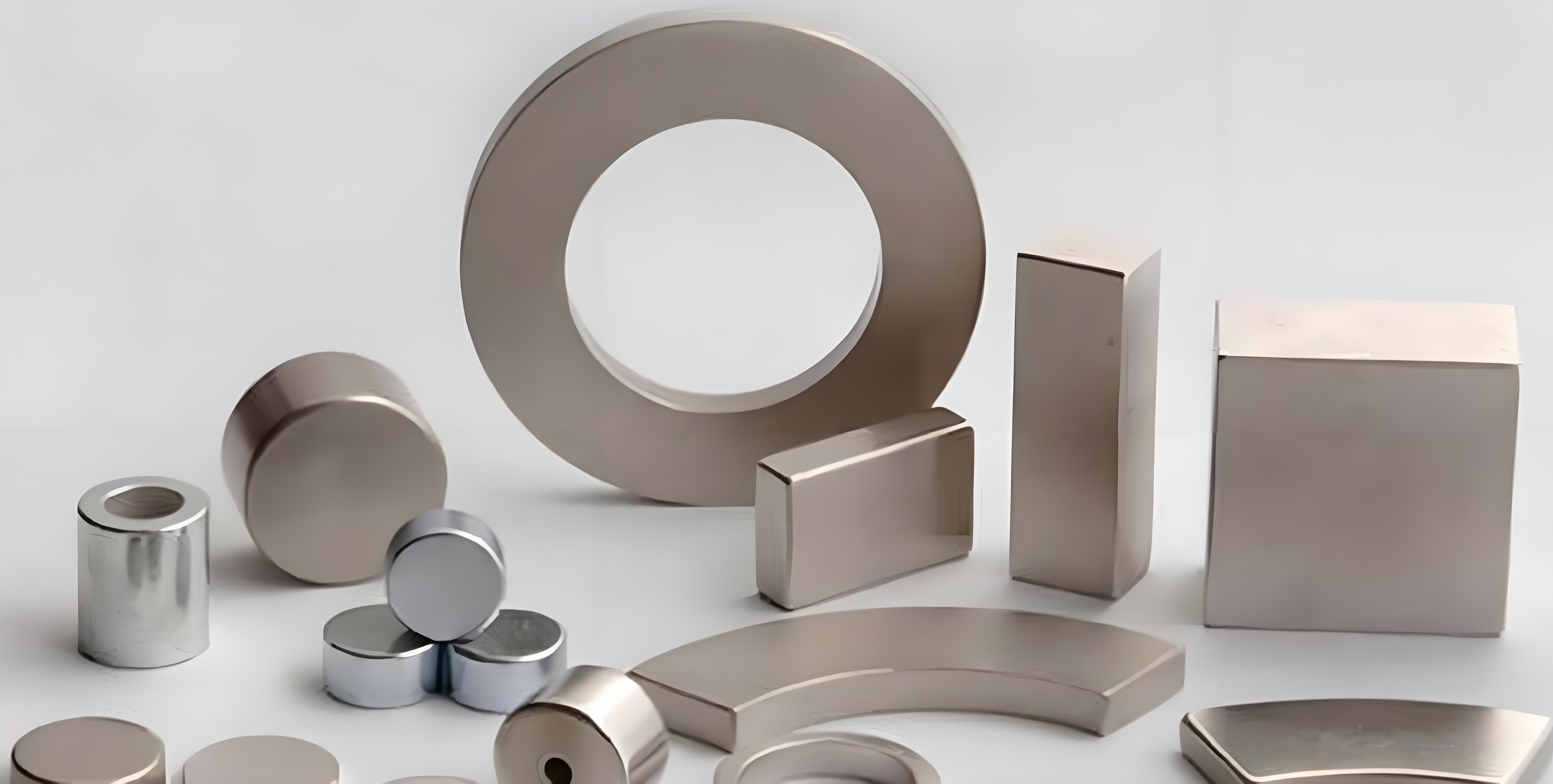
Top suppliers offer not only standard parts but also precision machining and customization based on your drawings (discs, blocks, rings, arcs, special shapes), plus professional magnetic circuit design and selection advice.
2. Quality Assurance System in Strict Quality Control of Neodymium Magnets
Verify whether the manufacturer holds quality management system certifications and is equipped with complete testing devices (gauss meters, flux meters, salt spray test chambers, etc.) to strictly inspect performance, coating thickness and corrosion resistance for each batch.
3. Stable Production Technology in Quality Consistency Neodymium Rare Earth Magnets
Stable sintering and heat treatment processes are the foundation of consistent magnetic properties. Inquire about production capacity and quality control procedures to avoid quality issues caused by batch variations.
4. Comprehensive after-Sales Service Avoiding Worry after Purchasing Rare Earth Neodymium Magnets
Provide detailed technical documentation and quality inspection reports, with rapid response to customer feedback and solutions for practical application issues.
IV. Conclusion: Smart Purchasing of Rare Earth Neodymium Magnets Starts with Professional Consultation
Choosing Rare Earth Neodymium magnets is a comprehensive technical decision that balances performance, cost, environmental requirements and supply chain reliability. Decisions based solely on price often lead to greater risks and hidden costs.
As an experienced manufacturer of high-end neodymium magnets and magnetic assemblies, Horizon Magnetics offers a full range of Neodymium permanent magnets from N35 to N52 and M to EH, while focusing on R&D and mass production of high-performance, high-coercivity Rare Earth Neodymium magnets. We strive to be your strategic partner. With advanced production lines, a complete testing center and an experienced technical team, we provide:
1. Free Selection Consultation:
Recommend the most suitable grade, size and coating to optimize your product cost-performance ratio based on your specific application.
2. One-Stop Custom Production:
Precision machining from prototyping to mass production of Neodymium rare earth magnets, meet all shape requirements.
3. Authoritative Quality Certification:
Supply material certificates, salt spray test reports and more for worry-free procurement. Over 90% of our Neodymium magnetic products are exported to European and American countries with strict quality standards.
4. Competitive Pricing:
Large-scale production and long-term stable customer orders of Neodymium magnets and magnetic systems enable us to deliver cost-effective procurement solutions.
Post time: Apr-20-2026